Beyond technology: How culture shapes payment modernization
Modernizing payment systems isn't just about technology—it’s about people, values and culture.
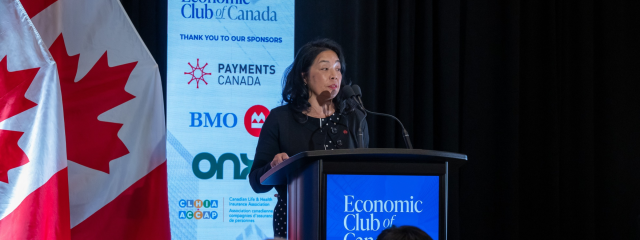
In this fireside chat at The 2025 Payments Canada SUMMIT, Kristina Logue, Chief Financial Officer at Payments Canada, sat down with Jane-Renee Retimana, Chief Strategy and Innovation Officer at Payments NZ, to explore how cultural identity — including the unique role of Indigenous cultures in Aotearoa (New Zealand) — shapes governance, trust and the success of payment modernization. Together, they discuss how meaningful consideration for the unique cultural context in their respective jurisdictions drives better adoption, fosters more inclusion and creates payment systems that truly serve the communities they’re built for.

Chief Strategy and Innovation Officer
Payments NZ
New Zealand’s approach to Māori cultural inclusion has been recognized internationally, particularly, values like hospitality and guardianship. How have these cultural influences shaped your payment modernization strategy?
Māori culture is deeply embedded in our culture in Aotearoa, New Zealand and shows up in the way the financial services sector goes about its work, including payment modernization. Many from outside Aotearoa are surprised by how ingrained biculturalism is across the sector. Major institutions, including the central bank, our biggest banks and Payments NZ, have a Māori strategy or Māori worldview guiding aspects of their work.
At Payments NZ, our Māori strategy sits alongside our company strategy. Our Māori sstrategy is called Tō Mātou, which means “our journey” and it focuses specifically on supporting Māori representations and tino rangatiratanga, which is “self- determination” within the payments network. Values like kaitakitanga (stewardship) and manaakitanga (hospitality) aren’t just symbolic, but they shape how we go about our work. We open meetings with cultural practices that create an inclusive space and prioritize relationship building and collaboration, which are central to the way we make progress as a networked industry. I am observing that banks and fintechs are increasingly integrating Māori values into their operations, not only from a cultural standpoint, but also because the Māori economy is among the fastest-growing in Aotearoa. Some banks have also acknowledged their historical roles in colonial policies and are now pursuing more collaborative, forward-looking partnerships.
These values are also influencing our modernization strategies. We’ve embedded Māori data sovereignty principles, similar to Indigenous data principles in Canada, into our open banking data handling guidelines called Ngā Tohu Ārahi. These provide an ethical, culturally grounded framework for data governance that centers around people, not just systems. It’s a way to ensure modernization reflects who we are as a country and puts people at the center of our design and ongoing stewardship.
Trust is very embedded in Māori culture. Is that something that permeates through when Payments NZ looks to balance innovation and risk?
We face the same trust issues as everyone else, but the payment industry here has always been highly collegial and cooperative. One

of the values we emphasize, like I mentioned before, is tino rangatiratanga — “self-determination” — which aligns with our structure. Unlike Payments Canada, Payments NZ is not legislated. We’re a self-governing payments industry association, and we believe that industry led design and development leads to better outcomes for customers and businesses. That momentum and strong sense of collaboration comes from within the industry.
As a subscale market, interoperability is critical for scale. No single player here has enough reach to succeed on their own, unlike in bigger markets like the U.S.. This need for collaboration drives cultural development initiatives like the formation of our API Centre to drive industry led open banking. Our banking efforts were part of our modernization strategy and cultural ethos of self-determination. While some assume the banks resisted, they have got on board and have funded most of it and continue to pay significant fees as third parties join.
Much of our innovation comes from working groups; bottom-up collaboration among practitioners. In Māori, we call this wananga — “a space to share ideas” — and surface the best ones. That’s how initiatives like our API Center and payment system modernizing initiatives have emerged. That same model, though, can slow down some areas due to the time it takes to build momentum and support.
With such a strong cultural foundation guiding your payment strategy in New Zealand, how do you approach interoperability when connecting with other jurisdictions? Do you need to adapt your roadmap to account for different cultural preferences and practices globally?
You have to respect the culture wherever you operate. We’ve seen overseas players struggle in Aotearoa because solutions that work elsewhere don’t always translate. It’s about how people interact and what customers need. I like what Dr. Scott Farrell, an Australian who has done a lot of work on open banking and consumer data rights, says about culture, payments and open banking systems. He’s noted how differently we approach things in Aotearoa, with culture driving much of how we operate. Every payment system must adapt to its own cultural context; you can’t simply copy and paste from other jurisdictions.
However, we do learn from others. We’ve used the first few versions of the UK’s open banking technical standard and the U.S. Federal Reserve’s fraud classifier in our work, both open-source and useful. But how you organize your network and operate your system must reflect your own country, people and way of doing business. Some imported solutions work, others don’t.
Canada is often grouped with the U.S., despite clear cultural differences, which also tends to happen with New Zealand and Australia. What are some of the key cultural differences between the two, particularly in how they’ve influenced your payment system and rollout approach?
We’re not Aussies, and they’re not us. Culturally, we’re worlds apart. We’re laid back, but more so than they are. Our Indigenous cultures are very different, too. From a payment perspective, our four largest banks are Australian-owned, which can be a sore point, especially considering how profitable they are and the money flowing back to Australia. While the banks operate here and employ great people, it creates a unique dynamic. We haven’t followed Australia’s approach in payments. In fact, their NPP real-time platform is seen negatively in New Zealand, mainly due to its high cost, so no one wants to replicate it. We’re also more cost-conscious. That’s part of our “number eight wire” culture; a Kiwi ethos of doing more with less. Early settlers brought number eight wire to Aotearoa and since our rural folk in particular have used number eight fencing wire to fix everything, that mentality still shapes how we innovate. But in payments, we’re at a turning point: sometimes we still “number eight wire” a solution, but now we also need to take a bigger digital leap to support self-determination for banks, fintechs and the broader community.
We’re also focusing on accessibility, especially for aging users, and those with hearing or visual impairments. While we don’t build solutions ourselves, we aim to create an environment that enables faster, more inclusive innovation through digital payments capability.
Subscribe to The SUMMIT newsletter to get the latest updates on The SUMMIT, including agenda announcements, exclusive promotions, industry resources and more.